

The European Institute of the Mediterranean (IEMed) has been entrusted by the European Commission to conduct, for the period 2009-2012, a yearly Survey of actors and experts on European- Mediterranean relations. This activity is part of the programme “Promoting mutual awareness, understanding and cooperation between the EU and the European Neighbourhood Region (South)”, co-funded by the European Union through the European Neighbourhood and Partnership Instrument (ENPI) regional track.
This project is fully in line with the IEMed’s mission as a think tank devoted to the analysis of and proactive thinking about Euro-Mediterranean relations. This ambitious Survey has three main objectives:
– Assessing the progress, achievements and shortcomings of the various dimensions of the Euro-Mediterranean Partnership, encompassing both the European Neighbourhood Policy and the Union for the Mediterranean;
– Developing an instrument for critical reflection able to mobilize experts and policy-makers operating in the design of Euromed policies;
– Identifying the main challenges and future issues at stake in the Mediterranean so as to be able to make appropriate policy recommendations.
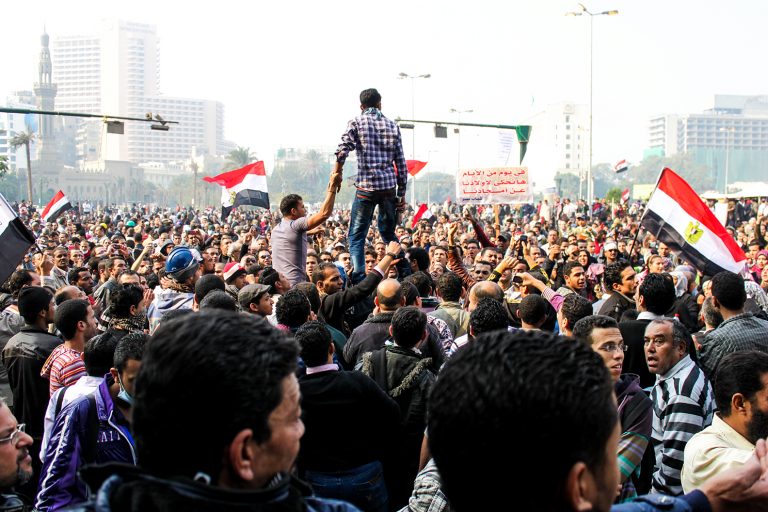
Building on the experience gained from the two previous years, this third Survey opted for a shorter and more focused questionnaire, which dealt mainly with the aftermath of the Arab Spring, given the high relevance of the topic, and with the Political and Security basket of the Partnership, for its obvious links with the events that have occurred in the southern shore.
The fieldwork of the present Survey was conducted between December 2011 and January 2012, coinciding with the first anniversary of the outbreak of the Arab uprisings, at a time when political transitions in the region were under way and a new mapping of actors and regional power balances was still being shaped. A total of 695 experts, policy-makers and representatives of civil society from the 43 member countries of the Union for the Mediterranean (UfM) have participated in this year’s Survey, which represents a 16% increase compared to the last one.
This report summarises and discusses the results of this third Survey, bearing in mind that it is not a mere public opinion poll, but an attempt to identify and critically assess the major successes and shortcomings, as well as the potential, of the Euro-Mediterranean Partnership (EMP) from the point of view of experts and actors directly involved in the process.
As regards the structure, the report is divided into two main parts: a descriptive analysis of the quantitative data and a qualitative section meant to interpret and shed light on the results obtained. For the preparation of the qualitative section, which consists of twelve articles in total, 16 experts from different Mediterranean countries were contacted by the IEMed. They were briefed to analyse the results of the 2011 Survey in their contributions in the light of the Arab uprisings and the state of play in the Arab countries, while also taking into account the latest developments in the Euro-Mediterranean institutional architecture.